The Land Development Lifecycle: What Every Stakeholder Should Know
Land development is more than just building structures on a piece of land—it’s a complex, multi-phase process that transforms raw or underutilized land into usable, valuable property. Whether you’re a landowner, investor, developer, planner, or community member, understanding the full lifecycle of land development is critical to making informed decisions and maximizing outcomes.
Site selection and due diligence
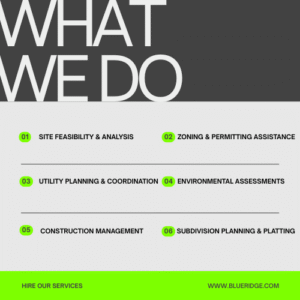
Developers assess land based on zoning, access to utilities, topography, environmental constraints, and local market demand. This phase involves in-depth research, legal reviews, and often working with engineers and surveyors to determine if the site is suitable for the proposed use.
Planning and Design
Architects, planners, and engineers work collaboratively to create site plans that meet regulatory requirements while maximizing land use efficiency. Community input and environmental impact assessments may also be part of this stage, especially for larger developments. Stakeholder engagement is critical here to build consensus and avoid future conflicts.
Entitlement and Permitting
Securing the necessary zoning approvals, land use changes, and construction permits is often one of the most time-consuming aspects of the development lifecycle. Stakeholders must work closely with local governments and regulatory bodies to ensure compliance with municipal codes and environmental regulations.
Construction
This is where the vision becomes reality. Coordination between contractors, utility providers, and inspectors is essential to stay on schedule and budget. Regular site monitoring and quality control ensure the development meets safety and design standards.
Finally, the project delivery and post-development phase includes final inspections, occupancy permits, and sometimes, marketing and sales. For residential or commercial projects, this may involve turning over property to homeowners, tenants, or facility managers. For infrastructure or public-use spaces, the responsibility might shift to municipalities or utility companies.
Communication and collaboration among stakeholders
—from investors and contractors to planners and local officials—life cycles are essential. Each stakeholder brings a unique perspective and priority to the table, and successful land development projects are those that align interests while navigating challenges such as environmental constraints, budget limits, and community expectations.
This blog post will serve as a comprehensive guide for anyone involved or interested in land development. Whether you’re just starting out or already managing active projects, understanding the full development lifecycle is key to reducing risk, improving outcomes, and creating developments that serve both private interests and public needs.